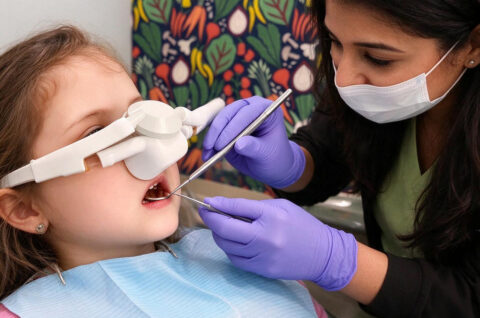
Is Laughing Gas Safe For Kids?
Yes, laughing gas is safe for most children when it is mixed with oxygen and breathed through a small nasal mask, and it does not put your child to sleep. Still, we do not start it automatically for every filling. A thorough review of your child's medical history comes first, and laughing gas is skipped whenever a child cannot breathe easily through the nose or has a condition on the medical skip list.
Is Laughing Gas The Same As Being Put To Sleep?
No, nitrous oxide is a mild inhaled sedative that lowers anxiety while keeping your child awake, aware, and breathing normally. Unlike general anesthesia or IV sedation, which are different tools reserved for different visits, nitrous oxide lets your child hear, see, and follow directions from start to finish. According to the American Dental Association's MouthHealthy guide, nitrous oxide is a safe and effective sedative mixed with oxygen and inhaled through a small mask over the nose to help a patient relax, not sleep. Modern delivery systems also include built-in safeguards so the gas and oxygen mix stays controlled throughout treatment.
Many Montclair families who drive in for a longer visit ask whether nitrous oxide means preparing for deep sedation. Nitrous oxide can support cleanings, fillings, and extractions, especially during a longer appointment when holding still is difficult. It is also considered when fear, anxiety, or behavior gets in the way, when a child's reaction to treatment is hard to predict, when a strong gag reflex makes care uncomfortable, or when a child does not tolerate other anesthesia. Even for eligible children, recommending the suitable, minimally invasive option often means skipping nitrous oxide when a child does well without it.
What Does Laughing Gas Feel Like In The Chair?
Within a few minutes of breathing normally through the small nasal mask, most children feel calm, comfortable, and slightly light-headed or tired. The American Academy of Pediatric Dentistry notes that nitrous oxide is well tolerated by children, and many describe tingling or warm sensations, or arms and legs that feel heavy. Because the gas has no color or odor, there is no strong smell to adjust to, though some patients report a slightly sweet taste. To let the gas work, your child breathes through the nose while keeping talking and mouth breathing to a minimum.
The name laughing gas comes from a calming effect that can lower inhibitions, not from forced laughter. Some children let out a few giggles, while others sit back quietly and look mildly unimpressed that a gas with that name did not come with a comedy routine. Before placing the mask, we talk to your child in plain, simple language and avoid euphemisms, explaining what the nasal mask is and what it does so nothing feels hidden. That explanation starts as early as a child's first dental visit. The visit moves at your child's pace.
Who Should Not Have Nitrous Oxide?
A child who has certain medical conditions, an active cold or stuffy nose, or difficulty tolerating a nasal mask is not a good candidate for laughing gas that day. Reviewing your child's medical history always comes first, so bring a current medication list. Guidance from the American Academy of Pediatric Dentistry lists six situations where nitrous oxide should be skipped: chronic pulmonary disease, an active upper respiratory infection, recent middle ear problems or operations, bleomycin sulfate therapy, MTHFR enzyme deficiency, and vitamin B12 deficiency. Most families want to know is laughing gas safe for kids before the visit, and the answer is yes when the child can breathe through the nose and is not on that skip list.
Because suitability depends on your child's health and comfort on the day of treatment, three common situations call for three different plans:
- A nervous child who can wear a nasal mask comfortably and breathe steadily through the nose is often a good candidate for nitrous oxide during a cleaning, filling, or extraction.
- A child who wakes up with a cold or an upper respiratory infection that day should wait, because congestion blocks nasal breathing and puts the child on the temporary skip list.
- A child who cannot use a nasal mask, struggles to breathe through the nose, or has a condition on the skip list needs another plan, starting with a consult rather than a mask trial in the chair.
Families looking for a special needs dentist for kids often ask how nitrous oxide fits into care. It can help some children who can wear a nasal mask, breathe through the nose, and communicate, though it is not the plan for every child. Both Dr. Mariam Khan, my partner, and I are board-certified pediatric dentists and moms, and pediatric specialty training includes caring for children who need more time. When a nasal mask is not realistic, we use a consult to build another approach so the decision follows your child.
Will My Child Be Groggy After The Mask Comes Off?
No, the calming effects fade within a few minutes because pure oxygen runs through the same nasal mask once the nitrous oxide stops. That brief oxygen flush clears the remaining gas and helps limit after-effects such as a headache. Because nitrous oxide wears off quickly, recovery takes place right in the dental chair before your child stands up.
Side effects are uncommon. The California Dental Association notes that nitrous oxide is not allergenic, though some children briefly show less coordination or attention for a few minutes afterward. Nausea or vomiting is less common, rare, and clears with oxygen. If nausea is a concern for your child, limiting food right before and right after the visit can help. If any side effect worries you afterward, call the office right away.
Once those few minutes of pure oxygen finish, most children are ready to step out of the chair and make the walk to the car. For families fitting an appointment in after an after-school pickup, the biggest hurdle left is usually figuring out which backpack made it into the back seat.
Questions Parents Ask Us
Is laughing gas safe for kids?
Yes, laughing gas is safe and effective for most children when mixed with oxygen and inhaled through a small nasal mask. Delivery systems include safeguards that keep the gas and oxygen mix controlled, and the California Dental Association notes that nitrous oxide is not allergenic. Reviewing your child's medical history beforehand confirms that it fits that appointment safely.
Does it put my child to sleep?
No, nitrous oxide does not put your child to sleep. It is a mild sedative that lowers anxiety while your child stays awake, breathes normally through the nose, and remains able to hear, see, and follow directions. General anesthesia and IV sedation are separate tools used for different visits, whereas laughing gas simply helps your child relax.
Can we still use it if my child has a cold?
No, laughing gas should be skipped when your child has a cold or an upper respiratory infection. Because nitrous oxide is inhaled through a nasal mask, congestion prevents the gas from working properly, and an active upper respiratory infection is on the American Academy of Pediatric Dentistry skip list. Waiting until nasal breathing is clear is the safer choice.
Why is it called laughing gas?
The nickname comes from the calming effect of nitrous oxide, which can lower inhibitions and leave some children relaxed enough to giggle. It does not force laughter, and many children simply feel warm, slightly light-headed, or tingly in their arms and legs without smiling once. Either reaction is normal because the goal is quiet comfort.
Does every filling need it?
No, we do not use laughing gas for every filling. Many children complete routine fillings comfortably without any sedation. Nitrous oxide is usually recommended when fear, anxiety, a strong gag reflex, or a longer visit makes holding still difficult. Choosing the suitable, minimally invasive option means leaving the nasal mask off whenever your child does well without it.
Will they be groggy in the car?
Most children are not groggy afterward because pure oxygen runs through the nasal mask for a few minutes once the nitrous stops, helping clear the gas and limit headaches. Effects fade within a few minutes, though a child may briefly have less coordination or attention right after. If any side effect worries you later, call the office.
When You Want To Talk It Through
If your child has an upcoming appointment and you want to talk through whether laughing gas makes sense, call Glen Ridge at (973) 995-9600 before the visit, or come in to 230 Sherman Ave #1A, Glen Ridge, NJ 07028 so we can review your child's medical history ahead of time.
Bringing your child's medication list and sharing any notes about a recent cold, middle ear problem, or strong gag reflex keeps planning simple.